 IFTTT Autopost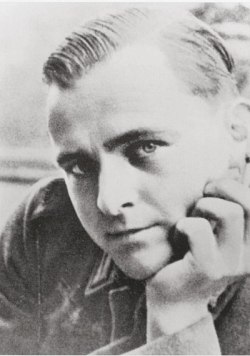
Wilhelm “Willi” Graf was born on January 2, 1918, in Kuchenheim, Euskirchen, Germany.
In 1922, when Willi was 4, the family moved to Saarbrücken. There, his father ran a wine wholesaling business and managed the second largest banquet hall in the city.
From an early age, Willi showed a willingness to join with others who thought like him, even when such thought went against the establishment of the day.
As an 11-year-old, Willie joined the Bund Neudeutchland, a Catholic movement for young men in schools. This organization was banned by Adolf Hitler and his Nazi movement when he came to power in Germany in 1933. In 1934, at the age of 16, Willi joined the Grauer Order (Gray Order) which was another Catholic movement known for its anti-Nazi rhetoric. The Nazis also banned that group.
Willi joined groups that were in line with his private moral compass, but he usually refused to participate in things that went against his beliefs. For example, though Hitler Youth was compulsory for youth in Germany with the rise of Hitler, Willi refused to associate with them. In fact, in his private address book, he eliminated the name of every friend who had joined the Hitler Youth.
In 1935, when he was 17, Willi and some friends marched in the annual May Day parade that the government held. The parade was characterized by groups sporting swastikas and giving allegiance to Hitler. Willi and his group, in contrast, marched behind their old school flag and ignored Hitler and the Nazis by refusing to give salutes or wear swastikas.
In 1937, when he had graduated from high school, Willie did his mandatory six-month stint in the Reichsarbietsdienst (RAD), or The Reich Labor Service. This was a government program designed to indoctrinate young men and women with Nazi ideology while helping the German economy.
When his government labor tour was over, Willi began studying to become a medical doctor at the University of Bonn. In 1938, however, he was arrested with some other members of the Grauer Orden because of the group’s participation. Fortunately, the charges were later dropped.
In 1940, Willi was drafted into the Germany army as a student-soldier, and for the next two years, he served as a medical orderly. What he saw as a soldier sicked him. For example, he was horrified at the terrible treatment Russian civilians received in Poland. When his tour of duty was over, his service was described as “exemplary.”
Following his service, Willi returned to his medical studies at the University of Munich. There, he became familiar with the White Rose, an anti-Nazi resistance group. His job in the organization was to recruit new members in cities around Germany. The White Rose also published several leaflets attacking Hitler and the Nazi movement and distributing them around campuses and other places.
Though Willi was never the main leader of the White Rose, he was a most cherished member for his wise presentation of self. One student, for example, said that whenever Willi spoke, he was precise, genuine, and whole reliable. He was also a person who put his whole self behind what he said.
On February 18, 1943, Willi and his sister Anneliese were arrested by the Nazis. On April 19, 1943, Willi was sentenced to death for “high treason,” “undermining the troops’ spirit,” and “furthering the enemy’s cause.”
Some other members of the White Rose were executed, but Willi was allowed to live longer, for the authorities believed that me might be tempted to divulge names of other White Rose members. He refused to cooperate in any way despite being kept in solitary confinement for six months. So, on October 12, 1943, the Nazis beheaded Willi at Stadelheim Prison in Munich.
Today, Willi Graf is known as a Servant of God in the Catholic Church. Many schools in Germany are named after him, and the Catholic Church in Germany lists him as one of their martyrs of the twentieth century.