 IFTTT Autopost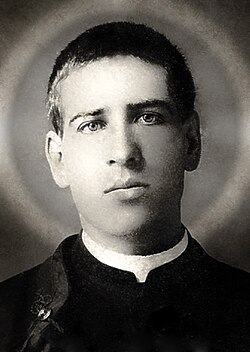
Toribio was born on April 16, 1900 in Santa Ana de Guadalupe, Jalostotitlán in the State of Jalisco, Mexico. Toribio entered the seminary at the age of thirteen and was known as a very cheerful seminarian with a great sense of humor. He was ordained in 1922 and celebrated his First Mass of Thanksgiving in his parish church.
When Fr. Romo was ordained, the seeds of the Cristero War were brewing. This was a time when the Mexican government was very anti-Catholic, and being a Catholic priest was quite dangerous. His first couple of years of priesthood were nomadic as he and his companion priests had to move from one place to another for their safety. Fr. Romo was noted for his great devotion to the Eucharist and to catechesis.
In 1927, Toribio’s bishop asked him to be the parish priest in Tequila. Several other priests had earlier refused that assignment because it was in an extremely anti-Catholic area. The priests felt that being the parish priest of Tequila would be like signing their own death warrant. Toribio, however, did not hesitate to take the assignment.
When Fr. Romo got to Tequila, he learned that the civil and military authorities in Tequila hated priests very much. Therefore, he stayed out of the main town and set up his headquarters in an abandoned tequila factory near a ranch called “Agua Caliente.” Ironically, “agua caliente” means “hot water” in English. This place was hidden by heavy vegetation. There he taught religious classes to the people and celebrated Mass and other sacraments. Under the cover of darkness, Fr. Toribio would secretly sneak into the town of Tequila at night to celebrate the Sacrament of the Sick to those who were homebound.
At 5 a.m. on Saturday, February 25, 1928, federal officials broke into his room and shot him many times. His sister, Maria, was with him as he died. Like others Cristeros who fought against the anti-Catholic government, she yelled out, “Viva Cristo Rey!” which means “Long live Christ the King!”
The officials stripped Toribio naked while singing vulgar songs. They dragged his bloody body to the town and threw it in front of the town’s courthouse. There, a powerful family got his body and prepared it for burial. The townspeople, in loving memory for their heroic priest, made a plaque that says, “The good shepherd lays down his life for his sheep.”
Pope St. John Paul II Fr. Toribio Romo González canonized Fr. Toribio Romo-González, with twenty-two other Mexican martyrs, on May 21, 2000.
The story of St. Toribio does not end there, however. Today St. Toribio is the hero of incredible legends and ballads resulting from his many mysterious appearances in the Sonoran Desert to immigrants coming from Mexico.
Many immigrants tell stories of how they were lost in the desert when suddenly a young priest appeared to them. He gives them food, drink, and a little money and guides them on their journey. He tells them that if they ever return to Mexico, they should go to the town of Santa Ana de Guadalupe and ask for Toribio Romo. Those who have returned are astonished when they get to the little church of Santa Ana de Guadalupe, for there in the church, they see the photo of the priest who appeared to them in the desert, St. Toribio Romo González.
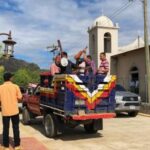
Today thousands upon thousands of people journey to the tiny town of Santa Ana de Guadalupe, Jalisco to visit the shrine of St. Toribio. They come to ask St. Toribio to help loved ones who are crossing the harsh desert to find a new life. Many of them get objects blessed to take with them on their journey. St. Toribio is an unofficial patron saint of immigrants.