 IFTTT Autopost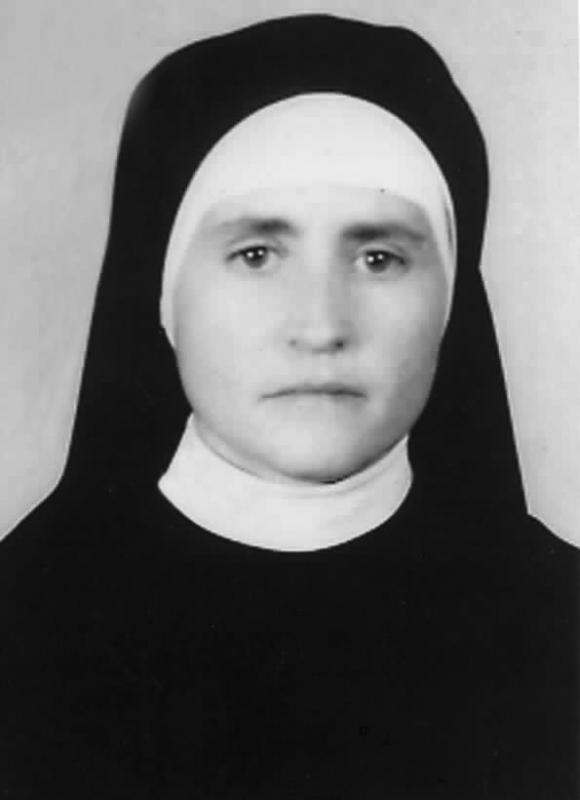
Inés Arango Velásquez was born on April 6, 1937, in Medellín, Colombia, eleventh of twelve children. Her parents, Fabricano Arango and Magdalena Velásquez were devout Catholic Christians, and they passed their faith onto their children. In addition to attending Mass each morning, they gathered to pray the rosary each evening.
Both sides of the extended family had an abundance of relatives who became religious and/or priests. Magdalena, for example, had two brothers who were Jesuits, one a missionary in China, a brother who was a Franciscan, and a sister who was a Poor Clare. Fabricano had two sisters in religious life, one a Capuchin Tertiary Sister, and the other a Conceptionist Franciscan Sister. Combined, the extended family had an amazing 90 priests and religious.
According to her friend, Sister Adela Paternina, Inés was always ready to help others, joyful, obedient, serious, and self-sacrificing. She also had a stubborn streak that showed itself when she was corrected.
After three years of high school, Inés joined the Lauritas Missionary Sisters, an order founded by Blessed Laura Montoya. However, while attending her sister Cecilia’s profession as a Capuchin Tertiary Sister, Inés decided to transfer to that order and was given permission to do so.
Inés began her postulancy in Medellín at the age of 17 and began her novitiate on July 2, 1955. In religious life, she became known as Sister María Nieves de Medellín. She made her first profession on July 7, 1956.
For the next twenty years, Sister María Nieves taught in various parts of Colombia. One of her students who became a Capuchin Tertiary Sister in Venezuela called her “a giant soul in a small body,” for Sister Nieves was only 5-foot, 2 inches tall and weighed 88 pounds. Students loved her as a teacher and as a person.
In January 1977, Sister Nieves was one of the founders of the San José Province that the Sisters in Colombia began. There, they opened a missionary house in the Prefecture Apostolic of Aguarico in the Amazon Jungle of Ecuador. When the new province opened a hospital in Nuevo Rocafuerte near the Peruvian border, Sister Nieves was named superior and spent most of her time in Ecuador.
During this time, the first bishop of Aguarico, Alejando Labaca Ugarte, a Capuchin, was invested in serving the indigenous Huaorani, also known as Aucas, people. He believed that it was important to have a woman as part of the project, so he invited Sister Nieves to join him. She happily accepted.
To prepare for this ministry, Sister Nieves spent extended periods of time in the jungle learning about the people and their food and culture. She also learned the language of the people. The learning curve was great. For example, the Aucas did not wear clothes, did not know how to use fire, and did not know how to travel by river.
The bishop was also interested in serving the Tagaeri people, an ethnic branch of the Huaoranis. This group, believed to be less than one hundred, distrusted outsiders and always refused to welcome others. The bishop and Sister Nieves decided to send the tribe a gift before they visited. So, they gathered food, towels, knives, and other utensils and had them dropped off by helicopter. Then, the bishop and sister decided to go themselves.
The day before they left, Sister Laura Fernández asked her if she was afraid they might kill her. Sister Nieves replied, “That’s not a problem. I’ll die happy.” Sister Laura then asked, “But Inés, is it true that you are not afraid?” “No, Laura, because if I die, I will die in the way and in place that I begged from the Lord.”
On July 21, 1987, Sister Nieves and Bishop Alejandro descended from a helicopter by crane into Tagaeri territory.
The Capuchins, knowing what the Tagaeri were like, insisted the helicopter return the following day to see if the sister and bishop were okay. When the helicopter returned, they saw the bodies of the two missionaries cut to pieces. So, they went back home to bring some soldiers in case the tribe was still around. When they returned, they found the Tagaeri had disappeared. The bodies of the bishop and sister were brought to Coco City for a Mass and burial.
After her death, the sisters found a note from Sister Nieves that said, in part, “In case of death: If I die, I will die happy. I prefer no one will know anything about me, I don’t seek honor. God knows…”
In May 2025, Sister Inés, Bishop Alejandro, and an Indian bishop named Matthew Makil were named Venerable by the Catholic Church.