 IFTTT Autopost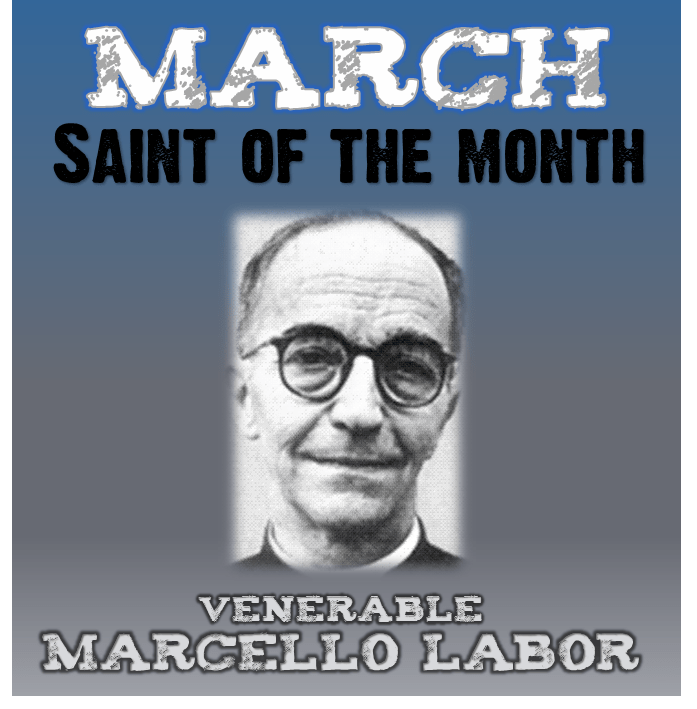
Marcello Loewy was born on July 8, 1890, in Triest, Italy, the younger of two children. His parents raised him as Jewish, the faith he practiced until he was twenty-four. His father, Carlo Loewy, was a banker born in Hungary, and his mother, Miriam Forti, was Italian.
From an early age, Marcello loved to read and write. For example, he kept in touch with friends via letters, and he kept diaries of his life, research projects, and ideas about the social issues of his time.
While he was studying in Vienna, Austria, he met Elsa Reiss. They married in 1912 in Trieste, Italy in the Jewish faith, but on December 22, 1914, Elsa and Marcello were baptized Catholic. The couple produced three children. He received a Doctor of Medicine degree from Graz, Austria.
During World War I, Marcello, served as a medical officer. For a brief period, he was captured by Russian forces, but he was soon released.
When he finished serving in the military, Marcello opened a private medical practice in Pula, Croatia. On the advice of his father, he changed his last name from “Loewy” to “Labor” to make him sound more Italian. In Pula, Marcelo led a full life. Not only did he have a home, wife, children, and professional practice, but he also made time to publish over 200 articles in newspapers and magazines on social issues of the day. He also worked with Catholic Action and the Saint Vincent de Paul Society in the area. He founded the “Catholic Center” to teach catechism and he encouraged Eucharistic adoration.
Marcello saw himself not only as a medical practitioner, but also as a researcher, though he did not have a Ph.D. in any field. He documented his thoughts in his diaries.
In 1934, however, Marcello’s world halted when his wife Elsa died. His children were grown by then, and he was now free from family responsibilities. He decided to follow his next big dream, to become a priest.
Because he had always admired the Salesians of Don Bosco, he applied to their order. For some reason, they did not accept him. So, he studied for the diocesan priesthood and was ordained in San Giusto Cathedral in Trieste on September 21, 1940.
Father Marcello’s first assignment was to be rector for the Trieste seminarians, then a spiritual director in Gorizia, and then the pastor of the cathedral. He became noted as a very good preacher and spiritual director.
From 1943 to 1945, Father Marcello was exiled by the fascist regime for being both a Catholic priest and of Jewish origin. Then, after World War II was over, he had to cope with the anti-Catholic communists. In fact, Josip Broz Tito imprisoned him on August 13, 1947, but he was released on December 30. During his imprisonment, he was given the honorary title of “monsignor” by the Catholic Church.
Monsignor Marcello died on September 29, 1954, in his hometown of Trieste of a heart attack, an attack he had predicted would occur. Before he died, he requested that when he died, he wanted to be buried as a simple priest, not a monsignor. His wishes were honored. The marker of his grave, which he himself wrote in advance, says, “Marcello Labor: former parish priest of San Giusto.”
Pope Francis named him “Venerable” on June 5, 2015.