 IFTTT Autopost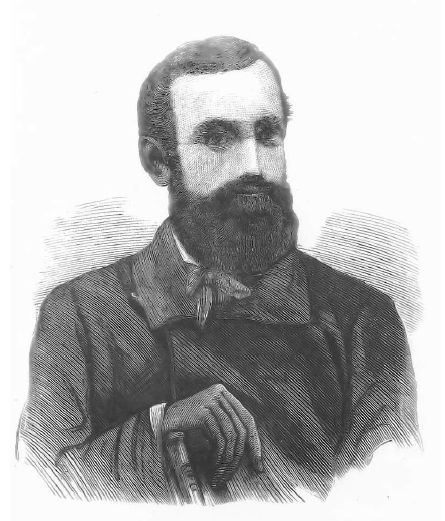
Edmund Bojanowski was born on November 14, 1814, in the Duchy of Warsaw (Poland). His parents, Walenty Bojanowski and Teresa Uminska, were devout Catholic Christians and members of the nobility.
In 1819, Edmund became so ill, that the physicians thought he would die. When he recovered, his parents took that to be a miracle brought about by their prayers of petition. Though he didn’t die, he never enjoyed a robust health the rest of his life. His health, however, did not prevent him from accomplishing great things in his life.
During part of his childhood, Edmund’s frail health prevented him from going to a regular school, so he had a private tutor. Later, he studied in Breslau from 1832-1835 where he studied art and literature. In 1835, however, Edmund developed tuberculosis. But, from 1836, he studied art and music in Berlin.
As a young man, Edmund had a strong desire to become a Catholic priest, but his unpredictable health status prevented him from entering the seminary. This desire, however, never left him. He kept his spiritual life strong through weekly Confession, annual retreats, Eucharistic adoration, Biblical meditation, Mass, and the like.
Edmund was an academically gifted person, and he used these gifts wisely. He collected stories, songs, and proverbs from rural areas of Poland, and published them in “The Friend of the People.” He also wrote and published poetry of his own, published a history of Serbia, and translated works in Serbian into Polish. During his life, Poland was under siege by Russia, Prussia, and Austria, all trying to eradicate the Polish culture from the people. Therefore, Edmund’s work was, in part, a pro-Polish reaction to the eradication efforts.
In addition to his excellent knowledge base, Edmund was also wise. He assessed the needs of the people. He saw many suffering from the turmoil the people were experiencing, not only from foreign invasions, but also from a cholera epidemic left children orphaned, sick, and neglected. Therefore, Edmund went to work putting his faith into action.
Edmund, without thinking of his own safety, nursed patients during the cholera epidemic of 1848-1849. He founded a new hospital, opened libraries and supplied books to combat illiteracy, gathered food for the hungry, opened orphanages, and established nursery schools for neglected children.
To help staff all the ministries he had established, Edmund founded or co-founded four communities of religious women: Sister Servants of Mary Immaculate; Sisters Servants of the Holy and Immaculate Virgin Mary; Little Servant Sisters of the Immaculate Conception; and the Sisters Servants of the Mother of God.
Because of his incredible activism helping those in need, his friends began calling him “The Second St. Vincent de Paul.”
Edmund finally was able to enter a seminary to study for the priesthood. But after two years of study, he died on August 7, 1871, at the age of 56.
Edmund was beatified on June 13, 1999. Blessed Edmund Bojanowski’s feast day is August 7.