
 IFTTT Autopost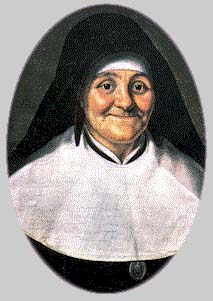
Julia Billiart was born on July 12, 1751, in Cuvilly, Picardy, France. Her father, Jean-François was a shop owner and a farmer, and her mother, Marie-Louise-Antoinette Debraine was a homemaker.
From an early age, Julia was attracted to her Catholic faith. When she was only seven, she knew the catechism by heart, and she shared her knowledge with her friends, and by the time she was 14, she proclaimed that one day, she would be a Catholic religious sister.
One of the skills Julia developed as a child was making beautiful embroidery and lace pieces. These, she sold in her family’s store and donated some to churches and a Carmelite convent that was near where she lived. People in the town were obviously impressed by Julia, for they nicknamed her, “the saint of Cuvilly.”
When she was 16, the Billiart family’s store was robbed, and the family never recovered financially. Because of the robbery, Julia went to work on a farm. In addition to her work, she taught her coworkers Bible stories, hymns, and talked about various aspects of living a spiritual life.
In 1774, while Julia was working in the family story with her father, someone came in and shot her father. She became paralyzed and became bedridden for 22 years. Julia used this time to strengthen her spiritual life. In addition to receiving Holy Communion each day, she taught the poor and noblewomen alike, and she prepared children for their First Communion. She also continued making her embroidery and lace for the altar. She also spent time much time meditating.
During the French Revolution, Catholic priests were required to swear allegiance to the French government by signing a Civil Constitution of the Clergy. This was an anti-Catholic document saying that the civil government had authority over the Church’s authority. Some priests signed the document, and they were known as “juried” priests, while the priests who refused to sign were called “non-juried” or “refractory” priests. The latter category of priests often suffered deportation, loss of positions, or even execution by the state. Julia was very much on the side of the non-juried priests.
In 1789, Julia helped a non-juried priest and refused to cooperate with a juried priest. From her bed, she directed that all the village boycott the juried priest. Now, with her life in danger, family and friends helped her escape to Compiegne by covering her with straw in a wagon bed.
Though she arrived safely, the stresses were too much for her, and she was unable to speak clearly. While in Compiegne, she had a vision that she was to found a new religious order of women.
In October of 1794, she met a noblewoman, Françoise Blin de Bourdon. Though Françoise at first was repelled by Julia’s inability to speak clearly, in time, the two became very close, and Françoise admired Julia’s deep faith and loving spirit.
On February 3, 1804, Julia and a woman named Catherine Duchatel founded the Sisters of Notre Dame in Amiens. Later, the order became known as the Sisters of Notre Dame de Namur. The new order’s primary mission was educating girls.
On October 25, 1805, Julia, Françoise, and two other women made their first vows. Françoise became known in religious life as Sister St. Joseph and became known as the “co-founder” of the order.
Mother Julia died on April 8, 1816, in Namur and was canonized on June 22, 1969, by Pope St. Paul VI. Saint Julia Billiart’s feast day is April 8, and she is a patron saint of teachers.
In 2025, the Sisters of Notre Dame de Namur are found in nations of Africa, Asia, Central America, Europe, North America, and South America.